From the Conventional Cooking Technologies to the Next-Generation Biomedical-Grade Ovens: A Comprehensive Review
Ozieme, A.D.
Department of Biomedical Engineering, University of Ibadan, Nigeria.
Adeleye, A. A. *
Department of Biomedical Engineering, University of Ibadan, Nigeria.
Ajide, O. O.
Department of Biomedical Engineering, University of Ibadan, Nigeria and Department of Mechanical Engineering, University of Ibadan, Nigeria.
*Author to whom correspondence should be addressed.
Abstract
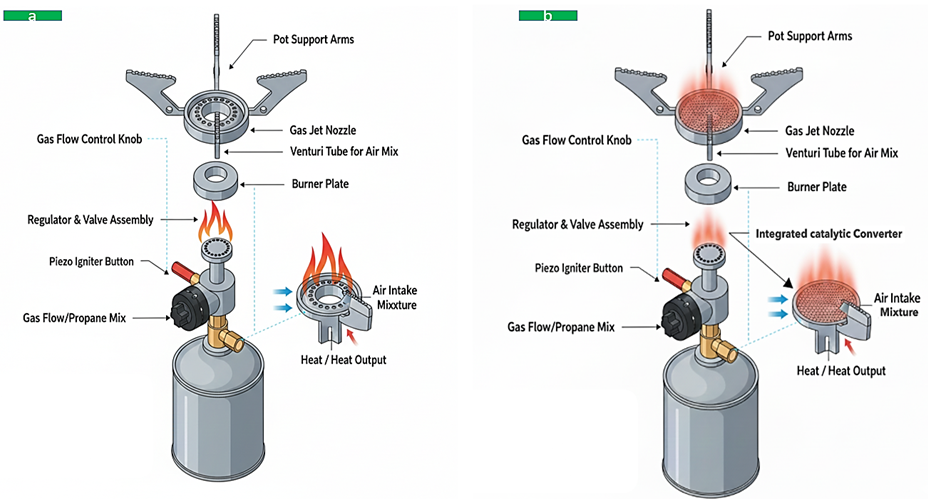
Electric and gas cooking appliances are widely used in domestic, clinical, and industrial environments, yet both present distinct health risks. Open butane gas burners, common in many Nigerian households, produce visible flames, but often release toxic gases such as carbon monoxide (CO), nitrogen oxides (NOx), and unburned hydrocarbons due to incomplete combustion, posing immediate respiratory hazards. In contrast, electric cooking ovens operate with closed, unseen heat sources that provide precise temperature control and improved hygiene but emit Volatile Organic Compounds (VOCs), aldehydes, and low-level electromagnetic radiation from heating coils, control circuits, and fans. These emissions, although generally within regulatory limits, may accumulate over time and affect vulnerable populations such as patients, laboratory staff, children, and individuals with respiratory or neurological sensitivities. This comprehensive review examines the scientific basis and engineering strategies for developing a biomedical-grade cooking oven capable of neutralizing toxic gas emissions and attenuating electromagnetic fields. Advanced gas filtration methods, including catalytic converters and activated carbon adsorption, electromagnetic shielding materials, Faraday-cage architectures, and smart sensor-driven monitoring systems are synthesized as an integrated framework for next-generation ovens. The review also identifies future research directions, commercialization challenges, and gaps in current designs, aiming to guide the development of safe, health-conscious cooking appliances for both domestic and biomedical settings. This review critically examines conventional and next-generation cooking technologies, highlighting their chemical and electromagnetic health impacts while proposing integrated engineering strategies for the development of safer biomedical-grade cooking ovens.
Graphical Abstract
Keywords: Biomedical oven, toxic gas filtration, electromagnetic shielding, indoor air quality, biomedical appliance design, electric cooking safety